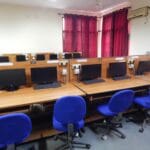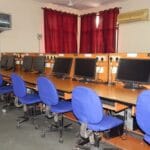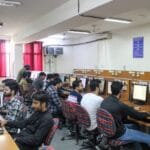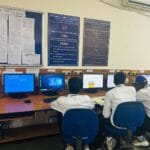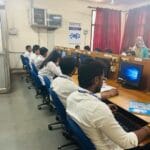




Computer Science and Engineering (CSE) laboratories are essential components of technical education, providing students with practical exposure to theoretical concepts. These labs help in developing programming skills, problem-solving abilities, and hands-on experience with modern tools and technologies. There are Six Laboratories concerning below subjects lab to provide technical and best skills to our students.
1. Programming Lab
The Programming Lab introduces students to basic and advanced programming concepts using languages such as C, C++, Python, and Java. Students learn:
- Syntax and logic building
- Control structures and functions
- Object-oriented programming
- Debugging and code optimization
2. Data Structures Lab
This lab focuses on implementing various data structures and algorithms, such as:
- Arrays, Linked Lists, Stacks, Queues
- Trees and Graphs
- Sorting and Searching techniques
Students gain an understanding of efficiency and performance analysis.
3. Database Management Systems (DBMS) Lab
The DBMS Lab provides practical knowledge of database design and management. Key areas include:
- SQL queries (DDL, DML, DCL)
- Normalization
- ER diagrams
- Transactions and concurrency control
4. Operating Systems Lab
This lab helps students understand how operating systems function. Experiments include:
- Process scheduling
- Memory management
- File systems
- Shell scripting
5. Computer Networks Lab
The Networks Lab focuses on communication protocols and networking concepts:
- Network configuration
- Socket programming
- Simulation tools like NS2/NS3
- TCP/IP protocols
6. Software Engineering Lab
This lab emphasizes software development practices:
- Requirement analysis
- System design (UML diagrams)
- Testing and debugging
- Version control tools (e.g., Git)
7. Artificial Intelligence / Machine Learning Lab
Students explore intelligent systems and data-driven models:
- Machine learning algorithms
- Data preprocessing
- Model training and evaluation
- Tools like Python, TensorFlow, Scikit-learn
8. Web Technologies Lab
This lab focuses on web development:
- HTML, CSS, JavaScript
- Front-end and back-end development
- Database connectivity
- Frameworks like React or Node.js
CSE laboratories bridge the gap between theory and practice. They equip students with technical expertise, improve logical thinking, and prepare them for real-world challenges in the IT industry.