


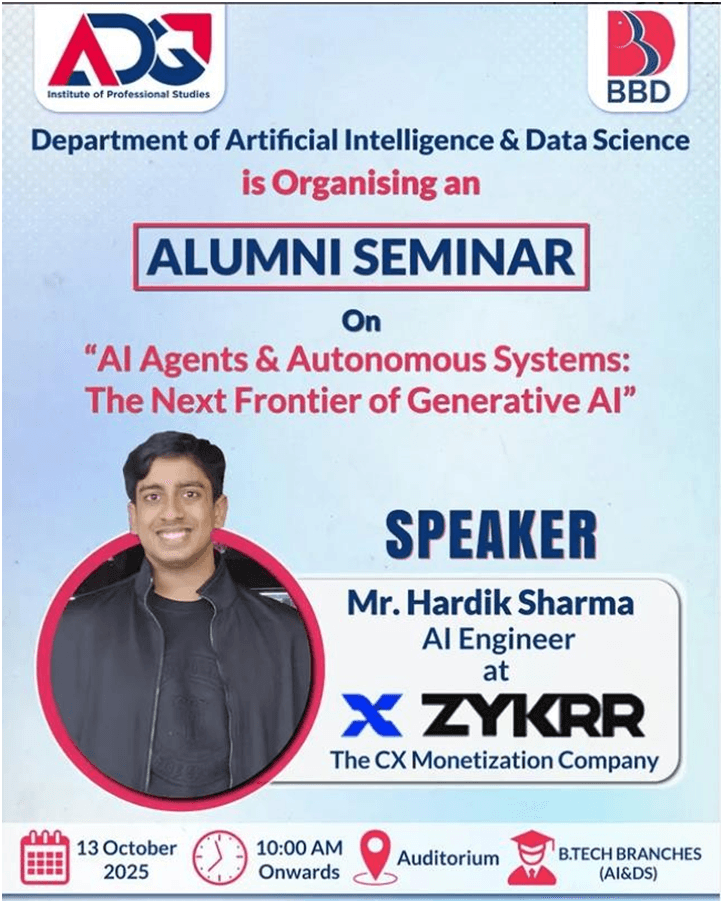
Organized By: Department of Artificial Intelligence & Data Science
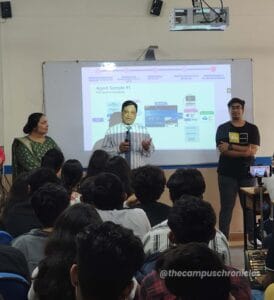
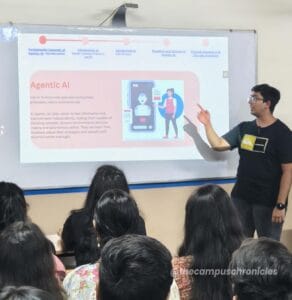
Speaker: Mr. Hardik Sharma, AI Engineer at The CX Monetization Company
Date & Time: 13th October 2025, 10:00 AM onwards
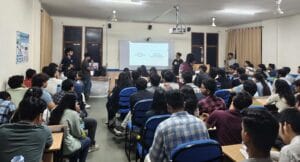
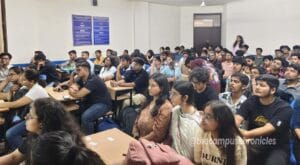
Venue: Seminar Hall, Dr. Akhilesh Das Gupta Institute of Professional Studies, Delhi
1. Introduction
This report summarizes the Alumni Seminar on “AI Agents and Autonomous Systems: The Next Frontier of Generative AI”, delivered by Mr. Hardik Sharma, an esteemed alumnus of the Department of Artificial Intelligence & Data Science, Dr. Akhilesh Das Gupta Institute of Professional Studies.
The seminar aimed to provide students with a comprehensive understanding of the evolution of Generative AI—from simple machine learning models to intelligent, autonomous systems capable of independent reasoning and decision-making. The speaker shared valuable insights into AI agents, multi-agent coordination, and real-world applications of autonomous AI systems transforming industries such as robotics, defense, finance, and healthcare.
The session successfully bridged academic knowledge with practical implementation while addressing technological, ethical, and career-oriented aspects of next-generation AI systems.
2. Objectives of the Seminar
- To introduce students to the concept and architecture of AI Agents and Autonomous Systems.
- To explain the evolution of Generative AI towards autonomy and adaptability.
- To explore applications of autonomous AI in industrial and real-world environments.
- To discuss ethical implications, safety challenges, and governance frameworks.
- To inspire students to pursue research and innovation in AI and intelligent systems.
3. Speaker Profile
Mr. Hardik Sharma is an accomplished AI Engineer currently working at The CX Monetization Company. A proud alumnus of the AI & Data Science Department, he specializes in Autonomous Systems, Multi-Agent AI, and Generative Model Deployment.
He has extensive experience in developing AI-driven solutions for robotics, automation, and intelligent decision systems. His work includes projects involving Large Language Models (LLMs), reinforcement learning frameworks, and adaptive AI architectures. His expertise lies in combining data-driven intelligence with real-time system adaptability.
4. Summary of the Seminar
4.1 Overview of Generative AI Evolution
The seminar began with an overview of the evolution of Generative AI—from basic text and image generation models to advanced autonomous agents capable of reasoning, planning, and learning.
The speaker explained how modern LLMs such as GPT, Gemini, and Claude are integrated with external tools, APIs, and robotic systems to build autonomous AI ecosystems.
4.2 Understanding AI Agents and Multi-Agent Systems
AI agents were defined as systems that perceive their environment, make decisions, and act to achieve goals.
Key Concepts Discussed:
- Architecture of AI Agents: Sensors, perception modules, decision-making logic, and actuators.
- Reactive vs. Deliberative Agents: Combining immediate responses with long-term reasoning.
- Multi-Agent Systems: Collaboration among multiple AI agents in distributed environments.
- Integration with Generative Models: Enhancing communication and adaptability using LLMs.
4.3 Autonomous Systems in the Real World
The seminar highlighted real-world applications of autonomous systems:
- Autonomous Vehicles: AI agents handling perception, navigation, and control.
- Healthcare: AI-powered diagnostics and robotic-assisted surgeries.
- Finance: Automated trading systems and fraud detection mechanisms.
- Manufacturing & Defense: Adaptive robots and intelligent surveillance systems.
The speaker emphasized the growing impact of AI-driven decision autonomy in modern industries.
4.4 Ethical, Safety, and Governance Considerations
A major focus was placed on responsible AI development.
Key Discussion Points:
- Data privacy and system safety.
- Bias and unpredictability in generative models.
- Development of trustworthy AI systems.
- AI alignment and interpretability research.
4.5 Research Opportunities and Future Directions
Students were encouraged to explore emerging research areas:
- Reinforcement Learning and Reward Modeling
- Neuro-symbolic AI and Hybrid Architectures
- Autonomous Decision Networks
- Generative Planning Systems and Robotics AI
The speaker also introduced open-source tools and datasets for hands-on experimentation.
4.6 Career Guidance and Alumni Interaction
Mr. Sharma shared insights from his professional journey and provided practical advice:
- Build a strong foundation in Python, Machine Learning, and Deep Learning.
- Learn frameworks like LangChain, PyTorch, TensorFlow, and ROS.
- Contribute to open-source projects and participate in hackathons.
- Balance theoretical knowledge with practical implementation.
5. Key Takeaways for AI & DS Students
- Generative AI is evolving into autonomous decision-making systems.
- Interdisciplinary knowledge (AI, robotics, cognitive science) is essential.
- Ethical AI development is crucial for trust and safety.
- Hands-on learning and experimentation are key to growth.
- Networking with alumni and professionals enhances career opportunities.