



Deep Learning Uncovered: Essential Principles and Insights
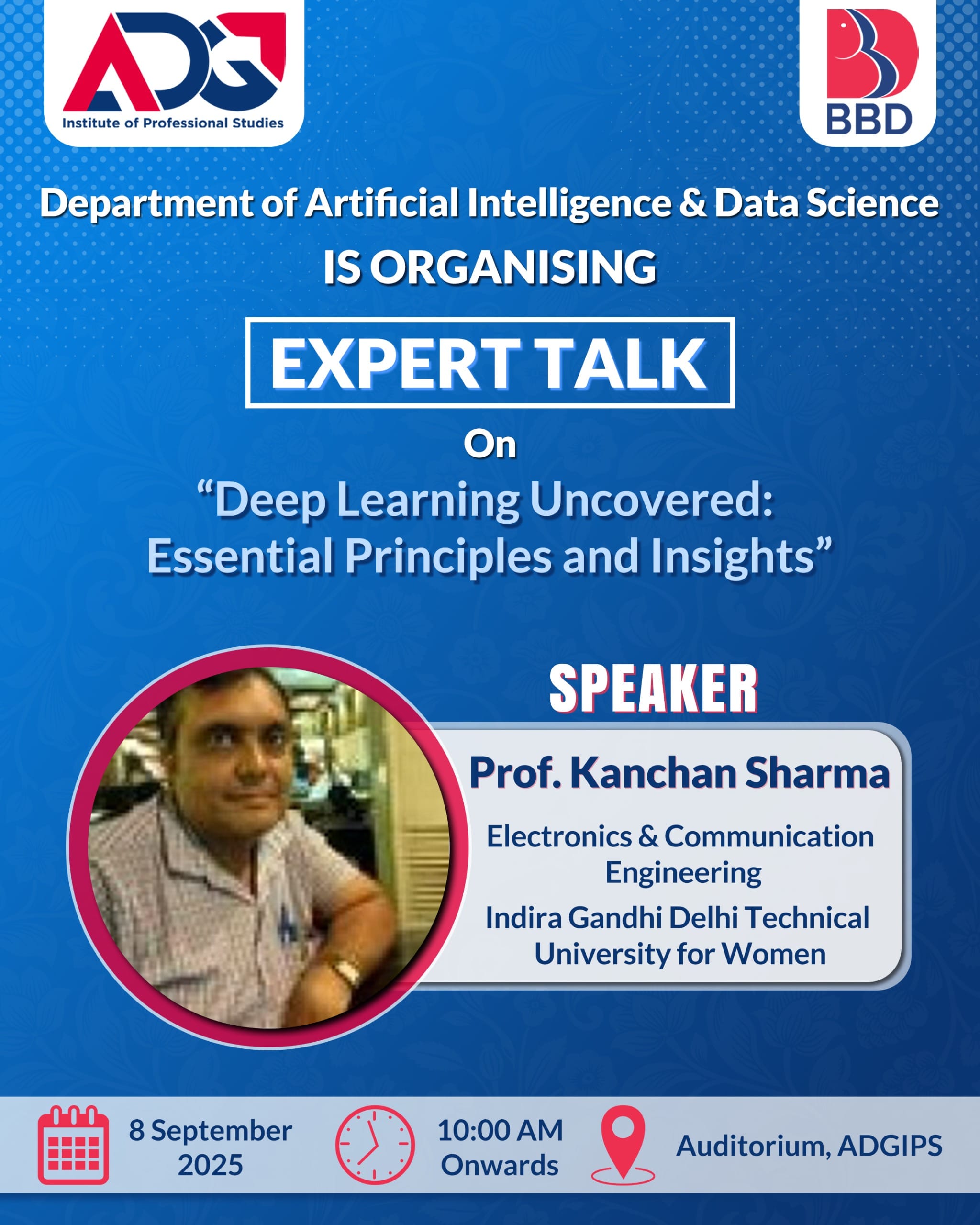
Organized By: Department of Artificial Intelligence & Data Science
Speaker: Prof. Kanchan Sharma, Indira Gandhi Delhi Technical University for Women (IGDTUW)
Date & Time: 8th September 2025, 10:00 am onwards
Venue: Auditorium, Dr. Akhilesh Das Gupta Institute of Professional Studies
1. Introduction
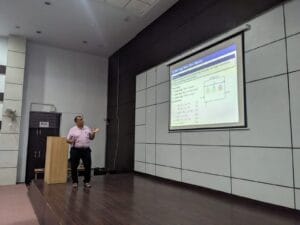
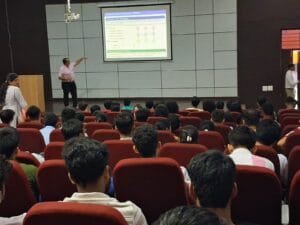
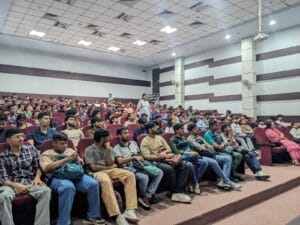
This report summarizes the expert talk delivered by Prof. Kanchan Sharma on the topic “Deep Learning Uncovered: Essential Principles and Insights”. The session was organized for students and faculty of the AI & Data Science (AI&DS) department at Dr. Akhilesh Das Gupta Institute of Professional Studies.
Prof. Sharma presented a balanced mix of foundational theory, practical guidance, research perspectives, and career advice relevant for undergraduate and postgraduate students pursuing machine learning and deep learning.
2. Objectives of the Talk
- To demystify core concepts underpinning modern deep learning.
- To connect theoretical building blocks with practical modelling strategies.
- To highlight recent trends, common pitfalls, and best practices in model development and deployment.
- To provide research and career guidance to students interested in deep learning.
3. Speaker Profile (Brief)
Prof. Kanchan Sharma is a faculty member at Indira Gandhi Delhi Technical University for Women (IGDTUW). She has a strong academic and research background in machine learning and deep learning, with several publications and student-guided projects in related areas.
Prof. Sharma is known for making complex topics approachable and for guiding students toward research and industry-relevant projects.
4. Summary of the Presentation
4.1 Foundations and Intuition
Prof. Sharma began with a refresher on the building blocks of neural networks: neurons, activation functions, loss functions, and optimization. She emphasized the intuition behind commonly-used activation functions (ReLU, Sigmoid, Tanh) and why activation nonlinearity is essential for representation learning.
4.2 Architectural Patterns
She reviewed canonical architectures and their application domains:
- Feedforward Networks (MLPs): Tabular and simple pattern tasks
- Convolutional Neural Networks (CNNs): Vision tasks, local receptive fields, parameter sharing
- Recurrent & Transformer-based Models: Sequence modeling, attention mechanisms, and why transformers replaced classical RNNs in many cases
- Autoencoders & Generative Models: Representation learning and generation (VAEs, GANs)
4.3 Training Dynamics & Optimization
Key practical components discussed:
- Gradient Descent Variants: SGD, Momentum, Adam — their trade-offs
- Regularization Techniques: Weight decay (L2), dropout, data augmentation, early stopping
- Normalization Strategies: Batch normalization, layer normalization
- Learning Rate Schedules: Cyclical learning rate, warm restarts
4.4 Practical Model Building
Prof. Sharma shared an end-to-end workflow:
- Problem framing
- Data collection and cleaning
- Exploratory data analysis
- Model selection and hyperparameter tuning
- Validation strategies (cross-validation vs. holdout)
- Final evaluation
She also stressed reproducibility through seed control, environment management, and experiment tracking.
4.5 Interpretability, Robustness & Ethics
The talk included discussion on:
- Model interpretability (saliency maps, SHAP, Integrated Gradients)
- Robustness to distribution shifts and adversarial examples
- Ethical considerations such as bias, fairness, and responsible data handling
4.6 Research Directions & Industry Trends
Prof. Sharma highlighted key trends:
- Self-supervised learning
- Foundation models
- Efficient inference (quantization, pruning)
- Multimodal learning
She encouraged students to explore research papers and work on reproducible projects.
4.7 Career Guidance
Practical advice for students:
- Build a strong portfolio with 2–3 well-documented projects
- Contribute to open-source or reproduce research papers
- Strengthen fundamentals in linear algebra, probability, and optimization
- Pursue internships and faculty collaborations
5. Key Takeaways for AI&DS Students
- Understanding beats memorization: Focus on concepts, not just tools
- Data matters more than model size: Quality data leads to better performance
- Experiment systematically: Change one parameter at a time and track results carefully