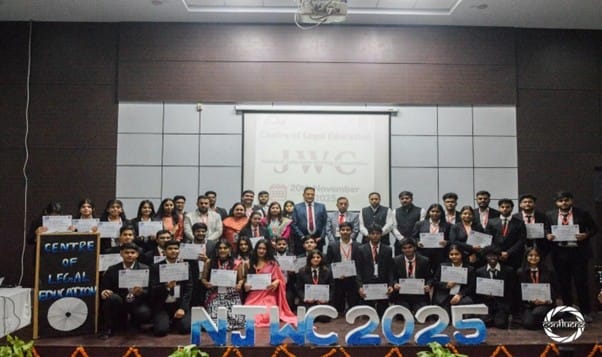




The Centre of Legal Education (CLE) at Dr. Akhilesh Das Gupta Institute of Professional Studies (ADGIPS) organized the National Judgment Writing Competition 2025 on 20 November 2025 (Thursday) at the Auditorium and Block-1, Room No. 1007 (Ground Floor) of the institute. The competition was conducted on the theme of Contract Law as part of the academic initiative under the Research and Innovation Society–2025. The event was convened by Dhruv, Assistant Professor, CLE, with Pronika Singh and Muskan Chandhok serving as Faculty Co-Conveners.
The primary objective of the competition was to introduce students to the art of judicial reasoning and structured legal writing. The activity aimed to enhance students’ understanding of legal principles by placing them in the role of a judge, requiring them to analyse facts, evaluate evidence, frame legal issues, and deliver a well-reasoned judgment. Through this initiative, participants were encouraged to apply statutory provisions, think critically, and understand the importance of impartiality, logical reasoning, and clarity in judicial decision-making. The competition also sought to strengthen research skills, improve legal writing abilities, and instill professional ethics that are essential for students pursuing a career in the legal field.
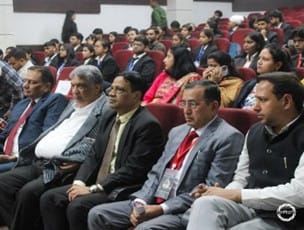
The event commenced with an inaugural session at 10:00 A.M., where participants were welcomed and briefed about the rules and structure of the competition. Following the inaugural ceremony, all participants were directed to their designated rooms for the commencement of the judgment writing exercise. The competition was designed to simulate a real judicial exercise in which participants were provided with a hypothetical case based on Contract Law. The case included detailed facts, legal issues, arguments from both sides, and relevant evidence. Students were required to carefully analyse the material and draft a structured judgment as if they were presiding judges.
The competition duration was two hours, consisting of one hour for reading and analysing the judgment problem and one hour for drafting the final judgment. During the reading period, participants were permitted to consult bare acts, library resources, electronic gazettes, and handwritten notes. However, once the writing phase began, participants were required to submit all external materials to the invigilators and were allowed to retain only their note pads for reference. The use of mobile phones, electronic devices, or any external assistance during the judgment writing phase was strictly prohibited to maintain fairness and academic integrity.
The judgments submitted by participants were evaluated on several parameters, including legal reasoning, structure and formatting, application of precedents, clarity of language, logical coherence, and the strength of the final conclusion. The competition witnessed enthusiastic participation from law students across the country, with 30 teams competing to demonstrate their legal analysis and judicial writing skills.
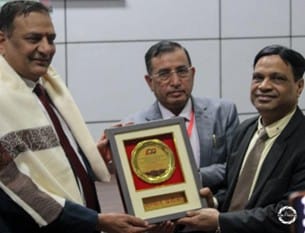
During the valedictory session, the top two judgments were recognized and awarded. The Winner’s Trophy along with a cash prize was awarded to the team from Gujarat National Law University, Gandhinagar, while the Runner-Up Trophy along with a cash prize was awarded to the team from University of Petroleum and Energy Studies, Dehradun. All other participants were presented with certificates in recognition of their participation in the competition.
The National Judgment Writing Competition 2025 proved to be an intellectually enriching and practical learning experience for the participants. The activity significantly enhanced students’ understanding of judicial methodology and legal analysis. By engaging in the process of drafting a judgment, students gained practical exposure to interpreting facts, framing legal issues, and applying statutory provisions and precedents in a structured manner. The competition also strengthened their research abilities, improved clarity and precision in legal writing, and developed their capacity to think logically under time constraints. Furthermore, the event encouraged courtroom discipline, professional ethics, and analytical thinking, all of which are essential qualities for aspiring legal professionals and future members of the judiciary.